
Let’s have a real, honest talk. You are probably reading this while on a quick break from a job that barely pays the bills, or maybe you are just exhausted from the endless 9-to-5 grind. You wake up, sit in traffic, work your life away, and by the end of the month, your bank account looks exactly the same. It is frustrating, right? Specially when you see everything getting more expensive while your paycheck stays frozen.
Now, imagine a completely different reality. Imagine working intensely for 3 or 4 weeks, and then… nothing. You get an entire month off. Fully paid. You could travel, spend real quality time with your family, or just chill and do absolutely nothing. Oh, and your yearly income? Easily doubling or tripling what an average office worker makes.
This isn’t some shady internet scheme or a “get rich quick” fantasy. This is the reality of the offshore industry.
Whether it is working on oil rigs, massive wind farm projects, or commercial ships, the offshore world is booming right now. The craziest part? They are facing a massive shortage of workers. The old generation is retiring, and companies are scrambling to find motivated people willing to put in the work. And no, you don’t need a fancy university degree to get your foot in the door.
The Truth About Life Offshore: Is It Actually Worth It?
Look, I am not going to sugarcoat it. Working offshore is not for everyone. It is not a vacation on a cruise ship. You will be out in the middle of the ocean, the shifts are long (often 12 hours a day), and the work can be physically demanding.
But the payoff? It’s life-changing.
Because the conditions are tough and you are away from home, companies are forced to pay a massive premium to keep their workers happy. We are talking about entry-level positions like Roustabouts, Painters, or Stewards starting at $50,000 to $65,000 a year, with zero experience. Once you move up the ladder (which happens fast if you are a hard worker), hitting $100,000+ is incredibly common.
Plus, you literally have zero living expenses while you are on the rig or ship. The company pays for your flights, your food (which is usually a massive, all-you-can-eat buffet), and your accommodation. Every single dollar you make goes straight into your savings.
Let’s break down the real Pros and Cons:
✅ Massive Earning Potential: Entry-level pay is incredibly high, and the room for growth is huge. ✅ Unbeatable Time Off: The “rotation” schedule (like 28 days on, 28 days off) means you only work half the year. ✅ Zero Daily Expenses: Free food, free flights, free bed. You keep what you earn. ✅ No Degree Needed: Most starting positions only require basic safety training and a strong work ethic.
❌ Time Away From Home: Missing birthdays and holidays can happen, depending on your rotation. ❌ Hard Work: Long 12-hour shifts for weeks straight without a day off. ❌ Isolation: You are stuck on a giant piece of metal in the ocean with the same people for weeks.
Questions From the Guys (FAQ)
Whenever we talk about offshore jobs, our inbox explodes with the exact same questions. Let’s clear the air and kill those doubts right now:
1. Do I really not need experience? Nope! Positions like Roustabout (general laborer), Galley Hand (kitchen helper), or cleaning staff are entry-level. They teach you everything you need to know on the job. What they really care about is your safety certificates and your attitude.
2. Are women allowed to work offshore? 100%. The industry is pushing hard for diversity. There are plenty of women working in engineering, catering, logistics, and even heavy machinery operations. The facilities are fully adapted to accommodate everyone.
3. Is it super dangerous? It looks scary in the movies, but the reality is quite boring (in a good way). Safety regulations are insanely strict. You will spend more time doing safety drills and filling out hazard reports than actually doing risky things. It is statistically safer than driving a truck on a highway.
4. Will my phone work out there? Yes, but don’t expect 5G speeds. Most modern rigs and ships have decent Wi-Fi for WhatsApp, calling your family, and maybe some light YouTube browsing. Just don’t plan on playing competitive online games.
5. How old is too old to start? Age is just a number here. As long as you can pass the strict medical examination (proving you are healthy and fit), you can be hired. We see guys in their 40s and 50s switching careers and starting offshore all the time.
6. Okay, I’m in. What is the catch to get hired? The “catch” is that you can’t just send a normal resume and hope for the best. You need specific basic safety certifications (like BOSIET or STCW) and a very specific type of CV formatted for offshore recruiters. Without those, the HR robots will just delete your application.
Ready to Change Your Life?
If you are tired of the same old routine and you are ready to put in the work to build a massive financial safety net, the offshore industry is waiting for you. It takes a bit of effort to get the right papers and pass the medical exams, but once you are in, you are set.
Do not waste time trying to figure this out alone and risking getting scammed by fake agencies. We prepared a completely free, straightforward guide showing you exactly what certificates you need, how to fix your resume, and where to apply today.

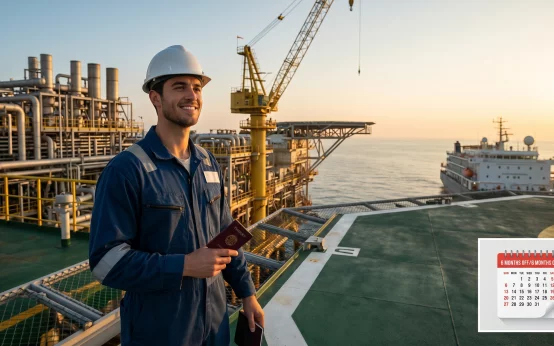 Work 6 Months, Get Paid for 12: The Beginner’s Guide to High-Paying Offshore Jobs
  Your 5-Minute Action Plan: How to Apply and Secure Your First Offshore Job
  Trabajos Remotos: Esto es lo que realmente funciona en 2026