
You’ll stay on this site.
Let’s be brutally honest for a second.
You wake up, make your coffee, and open your laptop hoping today is the day you finally land a job that lets you work from your couch.
You scroll through endless job boards. You send out dozens of resumes into what feels like a massive black hole. And what do you get back? Crickets. Or worse, a sketchy email asking you to “pay a small fee for equipment.”
It is incredibly frustrating.
You see people all over social media living the “work from anywhere” dream. They are traveling, spending more time with their families, and actually enjoying their Mondays.
And you are sitting there wondering, “What do they know that I don’t? Is this whole remote work thing just a massive scam?”
It is not a scam. But the way you are looking for these jobs right now? That is exactly why you are stuck.
The game has changed completely in 2026.
A few years ago, simply searching “remote job” would give you a few decent options. Today? The internet is flooded with millions of outdated listings, ghost jobs, and highly competitive roles that have 5,000 applicants in the first hour.
If you want to actually get hired and secure a steady income from home, you need to stop doing what everyone else is doing.
You need to know exactly which industries are secretly desperate for remote workers, and more importantly, where these top-tier companies are actually posting their jobs.
Let’s break down the truth about the remote work landscape right now, and how you can position yourself to get hired in record time.
Why are they hiring like crazy? We live in a world driven by data. Healthcare providers, logistics companies, and massive retail chains have mountains of physical and digital information that needs to be categorized, updated, and verified. They don’t need highly paid executives to do this; they need focused individuals who can type accurately and keep information secure.
What you will actually do: You will spend your shift transferring information from one format to another. This could be typing customer details into a secure database, updating inventory spreadsheets, or verifying medical codes. It is highly repetitive, which many people find incredibly relaxing.
✅ Pros:
- Very low stress and minimal interaction with angry customers.
- Huge number of Work-From-Home (WFH) opportunities available.
- Perfect for introverts.
❌ The Cons:
- The Isolation: You won’t have the casual coffee machine chats. If you are extremely extroverted, you need to make an effort to socialize outside of work.
- Time Zone Gymnastics: Sometimes your team is in London, your boss is in New York, and you are somewhere else. You might have to take an occasional weirdly-timed meeting.
- Discipline is Mandatory: There is no manager watching your screen. If you get easily distracted by your TV or your bed, you will struggle.
The Guys’ FAQ: What Everyone is Asking
I know your head is spinning with questions. Let’s tackle the biggest doubts that stop people from applying.
Do I need a university degree to get a remote job? Absolutely not. While specialized roles (like Legal or Medical) require degrees, most remote jobs in 2026 care about skills and experience. If you can prove you can do the job, companies do not care about a piece of paper.
How do I actually get paid if the company is in another country? It is easier than ever. Companies use platforms like Deel, Payoneer, or direct international wire transfers. You get your money securely, directly into your local bank account, usually in your local currency.
Are these remote job boards just full of scams? If you look in the wrong places, yes. That is why you should never pay a recruiter or buy “starter kits” from a company. Real jobs pay you. Stick to verified platforms that vet their listings to guarantee safety.
Do I need to buy expensive equipment to start? Not always! While having a decent laptop and good internet is your responsibility, many top-tier remote companies will actually send you a “home office stipend” to buy monitors, ergonomic chairs, or even a new computer once you are hired.
My English is okay, but not perfect. Can I still get hired globally? Yes. Unless you are a professional copywriter or in a high-level sales role, most companies just need you to be able to communicate clearly in written text (emails/Slack) and basic meetings. Confidence matters more than perfect grammar.
I have zero remote experience. How do I stand out? Highlight your autonomy. In your resume or cover letter, focus on times you managed projects alone, met strict deadlines, or organized digital files. Remote companies want self-starters who do not need babysitting.
The Next Step is On You
The truth is, thousands of fresh, high-paying remote jobs are posted every single day. The companies are out there, and they are aggressively looking for people exactly like you to fill roles in operations, support, marketing, and more.
You can either close this tab, go back to your current routine, and keep dreaming about that flexible lifestyle…
Or you can take five minutes right now to see the exact jobs that match your skills.
Stop guessing. Start applying directly to the verified companies that actually want to hire you.

 Work 6 Months, Get Paid for 12: The Beginner’s Guide to High-Paying Offshore Jobs
 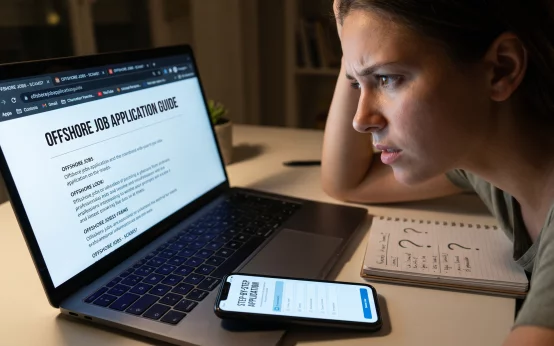 Your 5-Minute Action Plan: How to Apply and Secure Your First Offshore Job